Halloween: The Game East Haddonfield Map
Grain mill, neon lounge, and Phelps Garage on Myers' first stop after Smith's Grove.
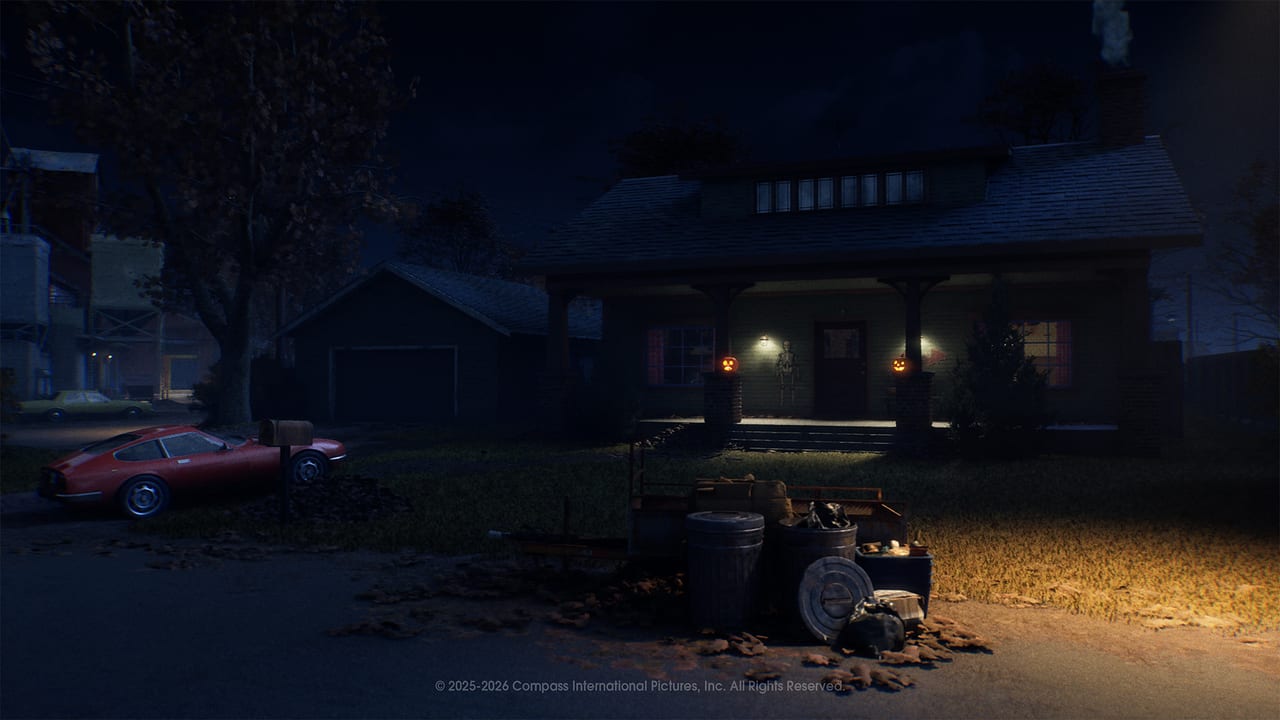
East Haddonfield is the fourth launch map in Halloween: The Game, and it is Michael Myers’ first stop after the Smith’s Grove Sanitarium escape. IllFonic Design Director Jordan Mathewson walked PlayStation players through the district on September 1, 2026: a rural, industrial sandbox instead of another Midwestern cul-de-sac. Digital launch is scheduled for September 8, 2026 on PlayStation 5, Xbox Series X|S, and PC. Digital Deluxe early access starts September 4, 2026 at 9:00 AM PT. Use this page for mill, lounge, and garage callouts; use the maps atlas when you need Heights, Town Center, and Orange Grove Estates in the same list, and the Guides Hub when you still need a night-one index.
The other three launch maps are the suburb and downtown the 1978 film already taught you. East Haddonfield is the road in. Farmlands, highways, and train tracks flank large industrial structures and small businesses. Mathewson called it a more open, rural playspace centered on a huge grain mill, with silos, storage areas, wrap-around porches, farm equipment, and dirt parking lots between the buildings. If your first 1v4 drops here, you are not learning hedges. You are learning mill interiors, neon, and long dirt lots.
The grain mill
The mill is the silhouette of the map. Official writing describes interior and exterior spaces that lead to unexpected confrontations and escapes. Silos and storage sit around it. Wrap-around porches and farm equipment fill the gaps. Dirt parking lots replace the tidy driveways you will see in Orange Grove. For Myers, the mill is a stack of dark pockets. Shape Jump still cares about darkness and line of sight, and a grain complex gives you both if civilians have not lit the floor you occupy. For civilians, a mill is not a house. Rooms are industrial. Sightlines break in ways a hallway does not. Read Play as Michael Myers for the jump rules and Survive as a Civilian for why a lamp still matters when the building is a silo.
Treat the mill as a meeting point, not as a maze you memorize from a trailer. Call mill porch, silo row, or dirt lot instead of pinging an unnamed field. The Getting Started checklist still applies: learn the role before you blame the architecture.
Rabbit in Red and Phelps Garage
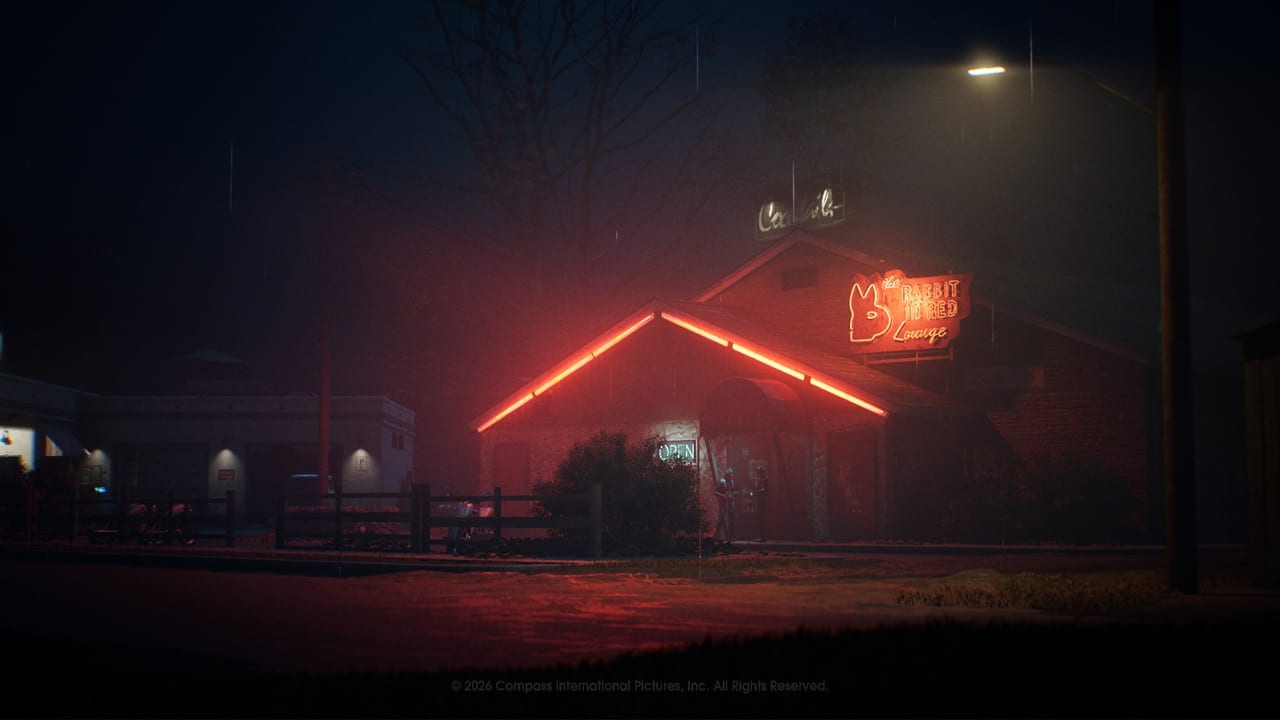
Two film-familiar landmarks sit on the outskirts. The neon Rabbit in Red Lounge is a leather-clad biker bar that has seen broken bottles and bareknuckle brawls. Official location copy warns that some residents and commuters skip pit stops here because East Haddonfield attracts the Castle Hill Rooks. Neon is not only flavor. It is light. Myers cannot enter or exit Shape Jump in direct light. A lounge that glows is a civilian fort until someone spends Blackout, and a trap if four people stack under a sign The Shape can already see from the highway.
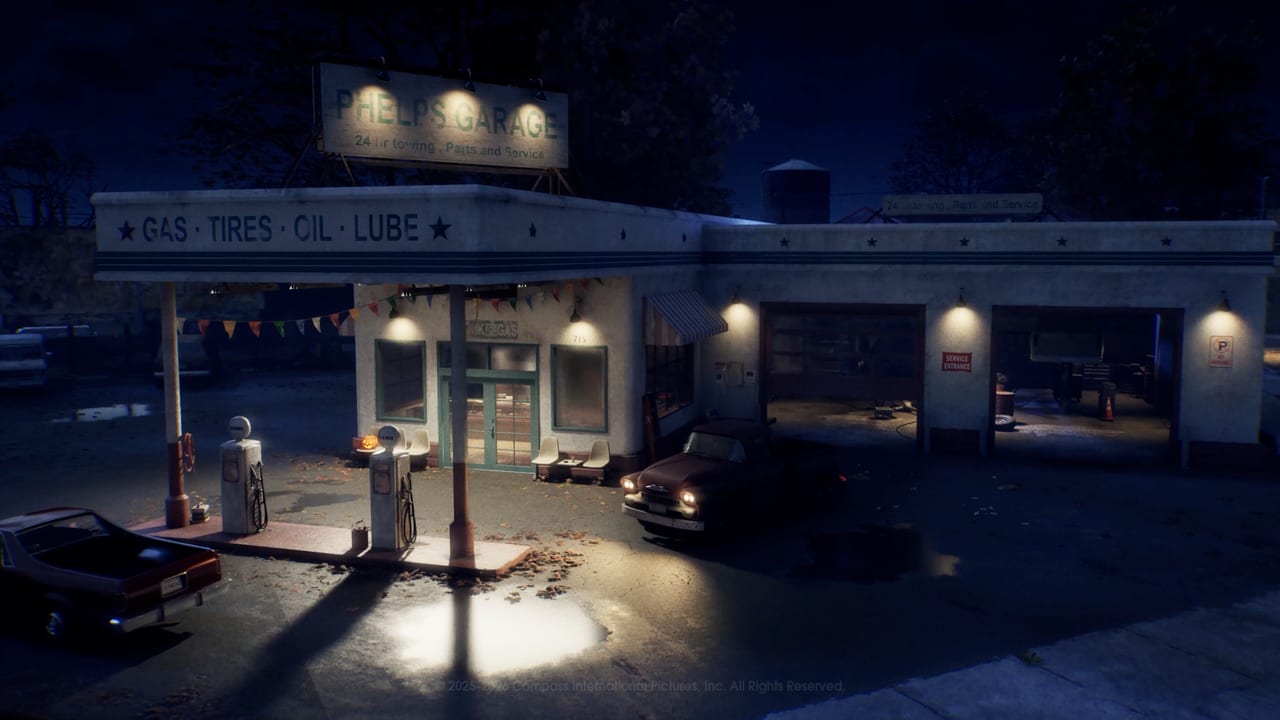
Phelps Garage is the gas-and-service stop on the same edge of town. Official copy sells automotive service and the best gas prices around, then admits you do not have many other options out there. In 1v4 it is pumps, bays, and vehicles. Vehicles are light sources in this game. A garage lot can hide a neighbor or advertise you across a dirt stretch. Drive when a road actually shortens a rotate. Do not treat the pumps as a camping toy.
Midwest Feed and the Castle Hill Rooks
Removed from conventional neighborhoods, East Haddonfield is a rural agricultural hub. Midwest Feed Company is headquartered here. Official materials call it an economic anchor that employs many residents and supplies a financial boon to the wider town. That matters for civilian play: NPCs live and work on this map. Warning neighbors, escorting special targets, and finding phones still win matches. The mill and feed complex are workplaces, not empty set dressing.
The Castle Hill Rooks give the district its unsavory reputation. You do not need a lore dump. You need to know the biker presence is why commuters skip the exit, and why the lounge feels like a different Haddonfield than Lampkin Lane. Queue Heights for the film suburb, Orange Grove for the babysitting block, and Town Center for downtown hardware and the cemetery. East Haddonfield is the industrial edge those three maps do not cover.
How the rural 1v4 actually plays
Mathewson described East Haddonfield as a more chaotic version of the city maps: haphazard sight lines, uneven fence configurations, and buildings piled up and knotted together in ways that encourage strategic stealth and unique evasion. That is the design brief. Open ground looks like an exit. It is also a gallery for a killer who can see you from a silo or a porch. Official language is blunt: the openness of the map can create enticing exit routes, but players have to be cautious taking those chances as they try to avoid Myers.
For The Shape, long outdoor rotates and knotted interiors are home. Walk the dirt lots when civilians can see you. Disappear between silos when they cannot. The walk is still the identity. Mathewson has said Michael gains power as matches progress, becoming a dominant killing force moving through the map. On a rural space that already favors the hunter’s eyes, that snowball is why early civilian lights and phones matter more than a heroic dash across a highway. Perk decks and loadouts that support those habits belong on the progression page.
For Heroes of Haddonfield, stealth and evasion are legal here in a way a well-lit Orange Grove lawn is not. Use the knotted buildings. Do not celebrate an open exit Myers can already see. Group up for a grab, then spread back into mill, lounge, and garage coverage so special targets do not die on a timer you ignored.
Story chapter and the 1978 blueprint
One Story Mode chapter occurs on East Haddonfield. Mathewson wrote that talks with Malek Akkad at Compass International Pictures and with John Carpenter influenced the campaign’s emphasis, and that Nick Castle — the original 1978 Michael Myers — did motion capture and shared insight on how to capture kills. The rural map is part of the walk home after Smith’s Grove, not a multiplayer-only extra. Play the chapter if you want mill and highway geography without a four-stack, then take the same landmarks into 1v4.
Clocks for Deluxe and digital day one sit on the release schedule. Map-reveal headlines sit on the news hub. A September 1 trailer is not a server that is already open.
Name the mill, the Rabbit in Red, Phelps Garage, and the dirt lot before you queue. East Haddonfield is the first road Myers takes after the sanitarium fence; survive that road without sprinting into headlights, and the rest of the town can wait.
Frequently Asked Questions
Quick answers to the most common questions.
Is East Haddonfield in the September 8 launch?
Yes. It is the fourth launch map alongside Haddonfield Heights, Haddonfield Town Center, and Orange Grove Estates. Digital Deluxe early access starts September 4, 2026 at 9:00 AM PT.
What landmarks are on East Haddonfield?
A huge grain mill with silos and storage, the neon Rabbit in Red Lounge, Phelps Garage, Midwest Feed Company headquarters, and Castle Hill Rooks territory. Farmlands, highways, and train tracks flank the industrial buildings.
How should civilians play the open rural layout?
Use knotted buildings, mill interiors, and uneven fences for stealth. Open exits look tempting, but Myers can see you across dirt lots and highways. Keep lamps and phones in play; do not sprint the open ground.
Does Story Mode use this map?
Yes. Jordan Mathewson said one story-mode chapter occurs on East Haddonfield, framed as part of Myers' walk home after Smith's Grove.
Why does Myers feel stronger late in a match here?
Mathewson has said Michael gains power as matches progress. Combined with long rural sightlines, that snowball punishes civilians who skip early lights and phone calls.
Who consulted on the map and campaign feel?
Nick Castle did motion capture. Malek Akkad and John Carpenter consulted. Mathewson cited those conversations when explaining why a story chapter sits on East Haddonfield.